
As regulatory authorities and health systems push toward digital transformation, Fast Healthcare Interoperability Resources (FHIR) is emerging as a key framework for enabling the exchange of health data—including product labeling information.
In this webinar, experts from LexisNexis® Reed Tech, a recognized thought leader in regulatory data standards and digital labeling, break down the implications of FHIR for medical device and pharmaceutical manufacturers. From enhancing electronic labeling (eLabeling) to streamlining updates across jurisdictions, FHIR is set to transform how labeling content is created, managed, and delivered.
What is FHIR?
FHIR is a standard for exchanging healthcare information electronically. It is designed to improve interoperability and facilitate seamless data sharing across different healthcare systems. It allows for the secure and efficient exchange of clinical and administrative data.
FHIR is an open standard developed by HL7 (Health Level Seven International). It specifies how healthcare information can be exchanged between computer systems, regardless of how it is stored.

How is FHIR being adopted in health authority systems globally
The challenges in today’s labeling ecosystem include manual entry errors, delays, and versioning issues. There is also regional inconsistency in data formats, update cycles, and regulatory requirements. A lack of interoperability causes gaps in traceability and compliance.
Because of these challenges, there is global momentum for digital transformation—accelerated by pandemics, policy, and public health initiatives. Governments and health systems are prioritizing data modernization. The HL7 FHIR Standard has been adopted by the European Medicines Agency (EMA), the U.S. Food and Drug Administration (FDA), and the Jordan Food and Drug Administration (JFDA), along with other global health authorities. There is a push for standardized, real-time health data exchange across borders.
FHIR natively integrates with Electronic Health Records (EHRs), Laboratory Information Systems (LIS), Radiology Information Systems (RIS), and pharmacy systems. It also supports structured clinical data, such as UDI, medication labels, and other device information. It enables automated syncing between regulatory updates and bedside decisions.
FHIR is also relevant to pharma and medical devices by enabling real-time product and patient data sharing to improve care and treatment. It facilitates clinical trial data integration and post-market surveillance, and supports harmonized global regulatory submissions and data reuse.
How FHIR impacts Unique Device Identification (UDI) and Structured Product Labeling (SPL)
FHIR bridges static regulatory data with dynamic clinical systems. It translates SPL and UDI into machine-readable, interoperable formats. FHIR supports real-time integration with hospital EHRs and decision support tools. By enabling automation of updates with FHIR, manual errors are reduced.
For manufacturers, FHIR improves traceability across supply chains and health systems. The implementation of FHIR facilitates global harmonization of product information across jurisdictions. Data integrity is enhanced with consistent, structured updates, and it facilitates regulatory agility and faster adaptation to changes.
The role of FHIR in driving efficiency, traceability, and compliance
FHIR plays a critical role in driving efficiency, traceability, and compliance. The adoption of FHIR moves labeling from static to dynamic by transitioning from paper-based to electronic labeling (e-labeling) using structured data models. FHIR enables context-aware, real-time delivery of up-to-date product information.
It supports lifecycle management with modular updates to labeling components, such as dosage, packaging, and safety. FHIR simplifies versioning and change tracking across product lifecycles, and it connects regulatory systems with downstream platforms including EHRs and public databases. It also improves the ability to target recalls and address safety concerns.
FHIR can boost compliance and audit-readiness because standardized, machine-readable formats enable faster audits and inspections. It ensures consistency across jurisdictions with harmonized data and minimizes compliance risks from manual errors or outdated documentation.
There are practical implications for regulatory and IT teams due to shifts from document authoring to data governance and automation. IT requires FHIR-capable infrastructure, APIs, and integration layers. Cross-functional collaboration is essential for scalability and sustainability. As FHIR’s interoperability expands the data ecosystem, the need for robust data governance increases.
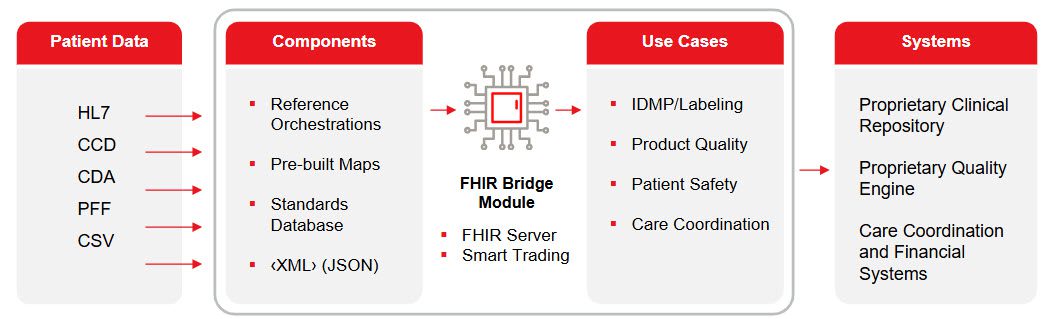
Actionable Next Steps for Manufacturers
Manufacturers can stay actively engaged by monitoring the EMA electronic Public Information (ePI) publications, which provide information on standards, specifications, demonstrations, and reports. Another actionable step is participating in EMA and industry pilots. Engaging in HL7 working groups as a member is another option. Also, monitor Gravitate Health, a public-private partnership aimed at enhancing access to reliable health information and empowering patients. Manufacturers can also contribute to the IRISS Forum. Stay involved with industry bodies such as the Drug Information Association, the Regulatory Affairs Professional Society, The Organization for Professionals in Regulatory Affairs, and the Canadian Association of Professions in Regulatory Affairs. Manufacturers should also partner closely with technology vendors.
Manufacturers also need to plan how to get data from documents into metadata, establish data governance with clear ownership and stewardship of processes, and have a technology plan that ensures data is readable, accessible, and submission-ready for global health authorities. Stay active in your global community and collaborate to establish best practices together.
Whether you’re just starting to assess FHIR’s relevance to your organization or looking to optimize digital labeling strategies, this on-demand webinar will provide actionable insights from the team helping to shape the future of health data standards.
To learn more, watch the on-demand webinar
If you’re looking to take the next step:
- LexisNexis® Reed Tech can support your global labeling and compliance strategy.
- Sam Thompson, one of our panelists, can guide you in establishing strong data governance frameworks.
- Our partner, Schlafender Hase, can help automate your proofreading and label verification workflows.